Chord chart for G dominant 7th add 13 / E (4th inversion) Guitar Chord: Notes, Shapes & Bass Note | Guitar Wiz

G7(add13)/E guitar shapes

Popular fretboard positions with fingering suggestions

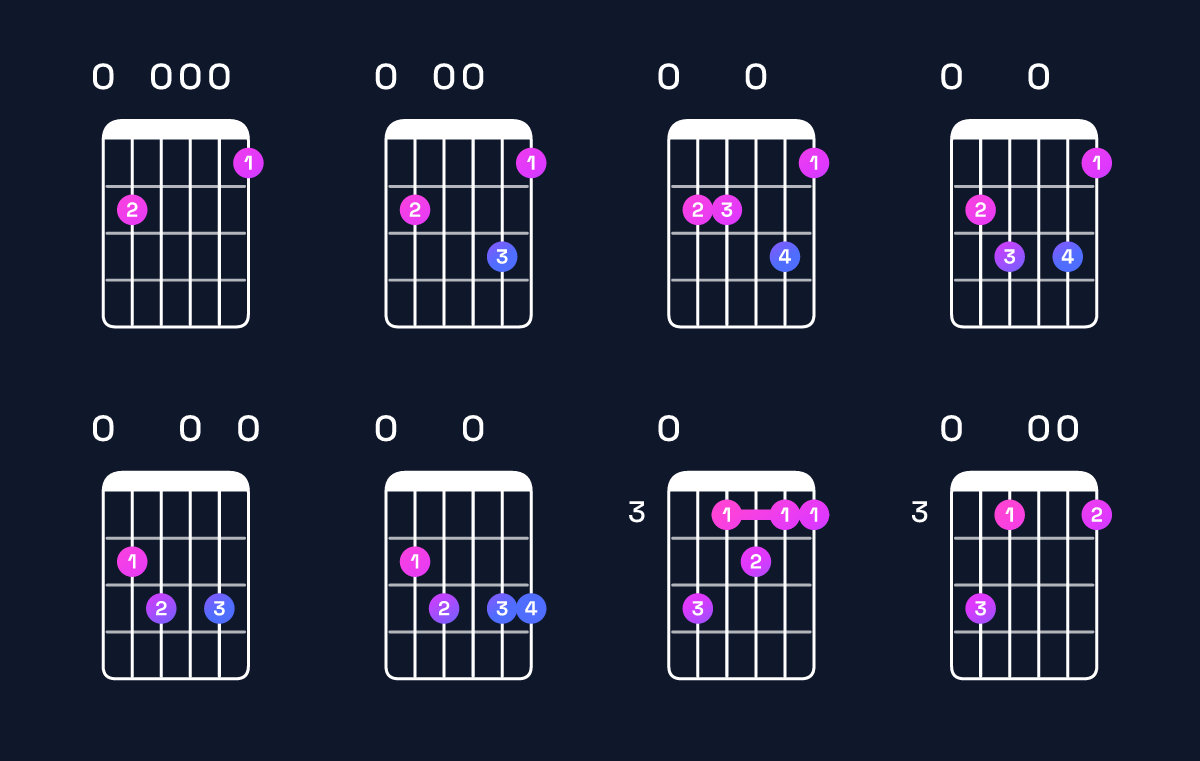
Showing 8 of 374 playable shapes

Post WhatsApp Facebook Reddit
G dominant 7th add 13 / E (4th inversion) guitar chord diagram showing fretboard positions

About the chord

G dominant 7th add 13 / E (4th inversion)

G7(add13)/E is the G dominant 7th add 13 / E (4th inversion) guitar chord with E in the bass. It uses the notes G, B, D, F, and E and the interval formula 1-3-5-♭7-13.

The G dominant 7th add 13 dominant 7th add 13 chord extends the dominant 7th with an added 13th E, creating a rich, layered harmony. The colorful combination of the minor seventh F and 13th E enhances blues and jazz progressions with a soulful, sophisticated feel. With E in the bass, this voicing functions as the 4th inversion of G dominant 7th add 13.

Also written as G7(add13), G7add13/E, and Gdom7add13/E.

Root note: G
Bass note: E
Chord tones: 5
Playable shapes: 374

Chord tones

GBDFE

Common guitar voicings

These are quick-start shapes for players who want the answer first and the deeper theory second.

Shape 020001

020001

View shape
  1. 1 Place the 1st finger on the 1st fret of the 1st string.
  2. 2 Place the 2nd finger on the 2nd fret of the 5th string.
  3. 3 Let the sixth, fourth, third, and second strings ring open.
  4. 4 Strum from the 6th string down.

Shape 022001

022001

View shape
  1. 1 Place the 1st finger on the 1st fret of the 1st string.
  2. 2 Place the 2nd finger on the 2nd fret of the 5th string.
  3. 3 Place the 3rd finger on the 2nd fret of the 4th string.
  4. 4 Let the sixth, third, and second strings ring open.
  5. 5 Strum from the 6th string down.

Notes & Intervals

Each note below shows how the chord is built from its root. This is the theory layer underneath the fretboard shapes.

G Unison (Root) 1

The root anchors the chord and defines its tonal center.

B Major Third 3

This note defines the chord's major quality and brings brightness to the sound.

D Perfect Fifth 5

The fifth reinforces stability and gives the chord its strong harmonic frame.

F Minor Seventh ♭7

The minor seventh adds bluesy or jazzy tension that wants to move onward.

E Major Thirteenth 13

The thirteenth adds richness and a polished extended-chord color.

Shape details

Every shape is shown with its diagram and exact fingering instructions.

G7(add13)/E shape 020001

How to play this shape

  1. 1 Place the 1st finger on the 1st fret of the 1st string
  2. 2 Place the 2nd finger on the 2nd fret of the 5th string
  3. 3 Let the sixth, fourth, third, and second strings ring open
  4. 4 Strum from the sixth string down to the first string

G7(add13)/E shape 022001

How to play this shape

  1. 1 Place the 1st finger on the 1st fret of the 1st string
  2. 2 Place the 2nd finger on the 2nd fret of the 5th string
  3. 3 Place the 3rd finger on the 2nd fret of the 4th string
  4. 4 Let the sixth, third, and second strings ring open
  5. 5 Strum from the sixth string down to the first string

G7(add13)/E shape xx2001

How to play this shape

  1. 1 Place the 1st finger on the 1st fret of the 1st string
  2. 2 Place the 2nd finger on the 2nd fret of the 4th string
  3. 3 Let the third and second strings ring open
  4. 4 Do not play the sixth and fifth strings
  5. 5 Strum from the fourth string down to the first string

G7(add13)/E shape 023001

How to play this shape

  1. 1 Place the 1st finger on the 1st fret of the 1st string
  2. 2 Place the 2nd finger on the 2nd fret of the 5th string
  3. 3 Place the 3rd finger on the 3rd fret of the 4th string
  4. 4 Let the sixth, third, and second strings ring open
  5. 5 Strum from the sixth string down to the first string

G7(add13)/E shape 020031

How to play this shape

  1. 1 Place the 1st finger on the 1st fret of the 1st string
  2. 2 Place the 2nd finger on the 2nd fret of the 5th string
  3. 3 Place the 3rd finger on the 3rd fret of the 2nd string
  4. 4 Let the sixth, fourth, and third strings ring open
  5. 5 Strum from the sixth string down to the first string

G7(add13)/E shape 022031

How to play this shape

  1. 1 Place the 1st finger on the 1st fret of the 1st string
  2. 2 Place the 2nd finger on the 2nd fret of the 5th string
  3. 3 Place the 3rd finger on the 2nd fret of the 4th string
  4. 4 Place the 4th finger on the 3rd fret of the 2nd string
  5. 5 Let the sixth and third strings ring open
  6. 6 Strum from the sixth string down to the first string

G7(add13)/E shape 023031

How to play this shape

  1. 1 Place the 1st finger on the 1st fret of the 1st string
  2. 2 Place the 2nd finger on the 2nd fret of the 5th string
  3. 3 Place the 3rd finger on the 3rd fret of the 4th string
  4. 4 Place the 4th finger on the 3rd fret of the 2nd string
  5. 5 Let the sixth and third strings ring open
  6. 6 Strum from the sixth string down to the first string

G7(add13)/E shape 023000

How to play this shape

  1. 1 Place the 1st finger on the 2nd fret of the 5th string
  2. 2 Place the 2nd finger on the 3rd fret of the 4th string
  3. 3 Let the sixth, third, second, and first strings ring open
  4. 4 Strum from the sixth string down to the first string

Quick answers

What notes are in G7(add13)/E?

G7(add13)/E uses the notes G, B, D, F, and E. Its interval formula is 1-3-5-♭7-13.

What is another name for G7(add13)/E?

G7(add13)/E is also written as G7(add13), G7add13/E, and Gdom7add13/E.

How do you play G7(add13)/E on guitar?

Place the 1st finger on the 1st fret of the 1st string. Place the 2nd finger on the 2nd fret of the 5th string. Let the sixth, fourth, third, and second strings ring open. Strum from the 6th string down.

Related Articles

Articles that reference this chord and explain how to use it in your playing.